FROM THE BLOG
How Often Should You Get Tree Removal?
Tree removal isn't something most homeowners schedule on a calendar. It's something you book when a tree tells you it's time. I'm David P Harder, and after 30 years of this work in St. Petersburg Fl, I can tell you the signs are usually right in front of you. Here's how to read them, for your home and for a property you manage.
Tree removal is reactive, not scheduled
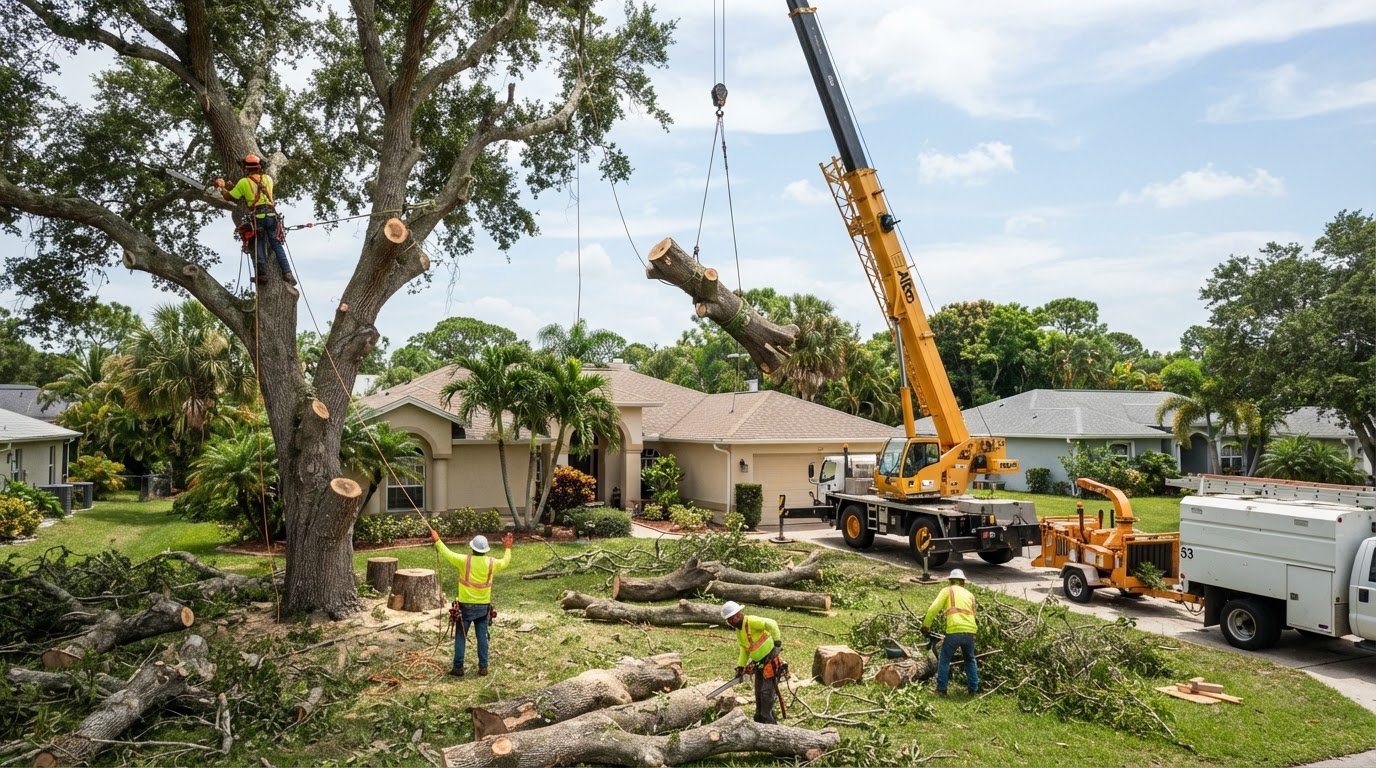
There's no set schedule for tree removal. A healthy tree in a good spot can stand for decades without needing to come down. Removal happens when a tree becomes dead, diseased, hazardous, or simply in the way of something you need to do with your property.
So the better question isn't how often. It's what to watch for. When you know the signs, you call us before a small problem becomes an emergency.
Signs it's time to book tree removal
These are the things I look for when I come out to a property. If you see any of them, it's worth a free estimate so we can decide together whether the tree needs to come down.
A dead tree
A tree with no leaves when everything around it is green, or with bark peeling off and branches snapping off on their own, is dead. A dead tree has nothing holding it up anymore, and it can fall without warning. That's a removal.
A split or cracked trunk
A crack running up the trunk or a split where two big limbs meet means the structure is failing. High winds finish the job. This is one of the most common reasons I get called, and it's a good reason to book before the next storm.
A tree leaning toward a structure
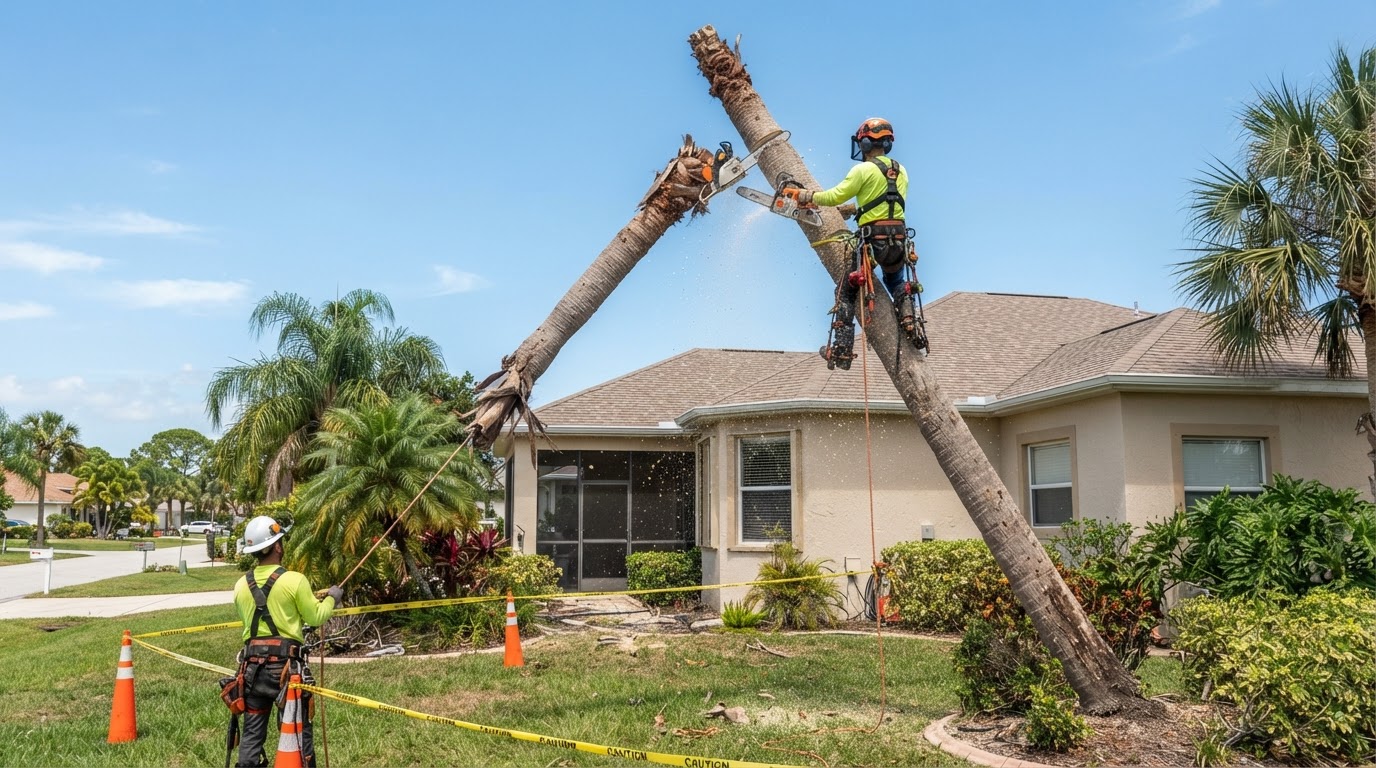
A lean that's gotten worse over time, especially toward your house, your roof, or your neighbor's driveway, is a hazard. Leaning trees are part of what we handle under hazardous tree removal, and the sooner we look at it, the safer your property stays.
Large dead sections
A tree doesn't have to be fully dead to be a problem. If a large section is dead while the rest is alive, the dead part can drop at any time. We assess whether the whole tree needs to go or just the dangerous section.
A tree in the way
Sometimes a tree is healthy but it's in the way of a shed, a new addition, a cleared lot, or a view you want back. That's a removal too. You don't need a hazard to justify it.
For homeowners
Walk your yard a few times a year, especially after storm season. Look up at the big trees near your house. If a branch is scraping your roof, a trunk has a crack you don't remember, or a tree that used to stand straight is now leaning, call for a free estimate before it becomes an emergency.
Trimming and pruning handle a lot of problems before they reach removal. If branches are just overgrown, tree trimming or tree pruning may be all you need. I'll tell you honestly whether the tree can stay or has to go.
For property managers and businesses
If you manage more than one property, you're dealing with more trees and more risk. A regular walk-through of each property is the way to catch problems early. Keep an eye on the trees near parking areas, walkways, and buildings, because those are the ones that cost the most when they fail.
After any storm that moves through Pinellas County, it's worth a check. Storm damage cleanup clears what came down, and we can tell you which trees took damage that makes them a future hazard.
Don't wait until it's an emergency
The cheapest tree removal is the one you plan. Emergency tree service is for the moments that can't wait, like a tree already leaning on a home or blocking a driveway. If you catch the signs early, you book a normal removal at a normal price, on your schedule.
We're based in St. Petersburg Fl and serve the surrounding cities. We're licensed, insured, locally owned, family-owned, and veteran-owned, and we've been doing this for 30 years.
See a sign that worries you? Call me at (727) 244-0971 or send your details through the free estimate form on our home page. I'll come take a look and tell you straight whether the tree needs to come down.